
 Image 1 of 1
Heart Health comes with free tea for a limited time.
Getting your heart health together with these plants.
Education is everything especially when it comes to your body. If you are not educated on your health someone will profit off of it. So even if you don’t don’t get the supplements read the information below to learn something. You are what you consume what’s inside of what you consumed is more important.
The number one cause of deaths is 1921 is heart disease. Which takes a life every 33 seconds and 7 seconds later causes a heart attack/stroke. Obesity, high blood pressure, insulin resistance, type 2 diabetes, High LDL cholesterol/ triglycerides, low LDL cholesterol, high C reactor proteins etc increase cardiovascular disease.
The heart is a hardest working muscle in the body. On average this fist sized organ beats 100,000 times a day, 35 million times per year and over 2 billion in a lifespan. It pumps 2000 plus gallons ain't doing traveling the length of 60,000 miles through blood vessels.
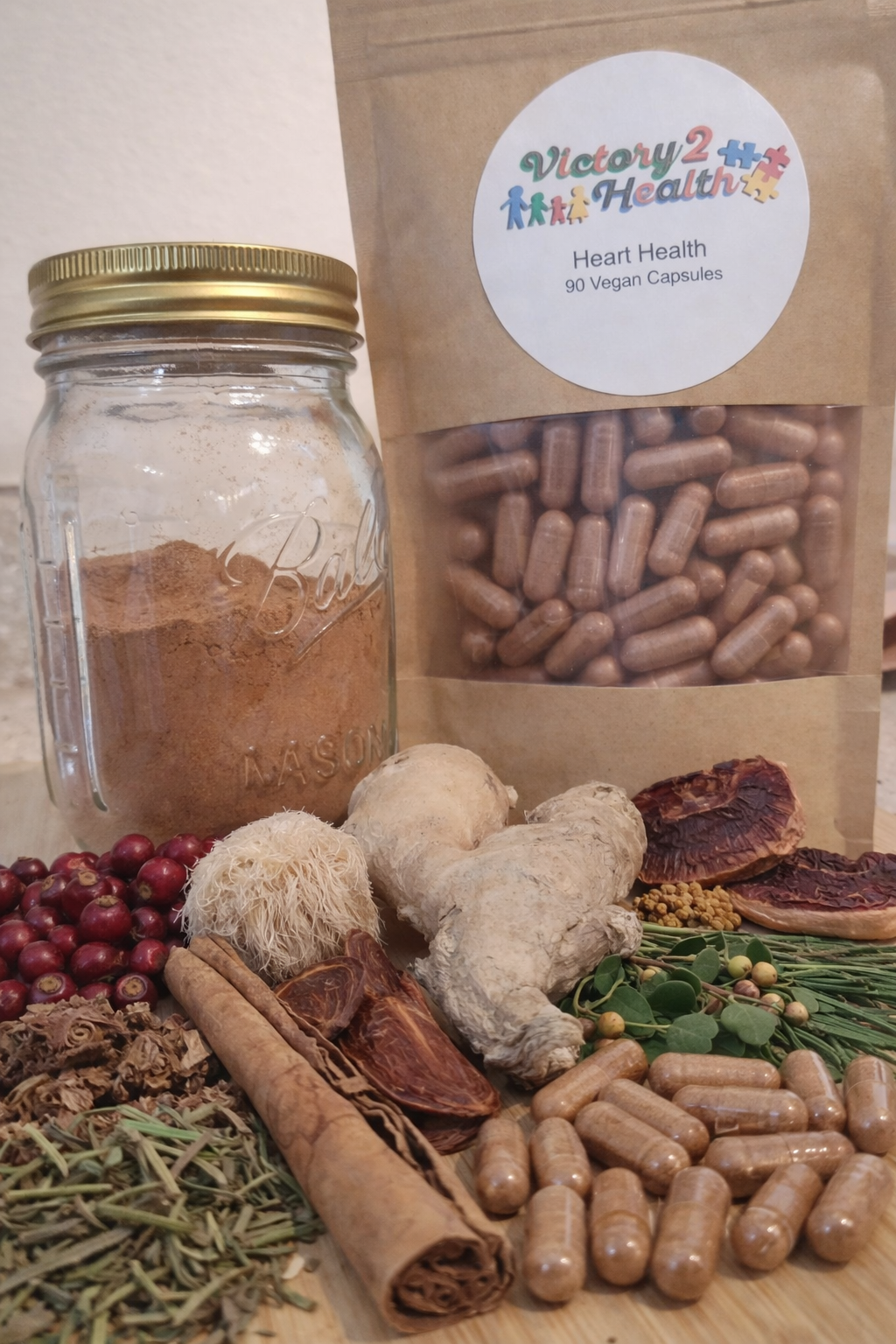
Ingredients - hawthorn berries, lion’s mane mushroom, cayenne pepper, reishi mushroom, ginger, ceylon cinnamon, mistletoe, gingko leaf, eleuthero root and olive leaf.
Hawthorn Berry (Crataegus spp.) improves blood flow, strengthens heart muscle, lowers blood pressure, supports congestive heart failure etc.
Science Says:
Promotes better heart function with people with heart disease, increases coronary artery blood flow, reduces blood pressure etc
(Cochrane Database, 2008).
Lion’s mane mushrooms supports nerve regeneration, reduces oxidative stress, improve blood pressure (good for the autonomic nervous system that effects the heart) etc
Science Says:
Helps nerve growth factor (NGF), which benefits the vagus nerve which regulates heart rate and blood pressure. The vagus nerve is the longest cranial nerve providing a link between the brain and essential organs (heart, lungs, digestive tract) to regulate parasympathetic functions like heart rate, blood pressure, digestion, and immune responses. Studies also show it lowers inflammation and oxidative damage that contribute to cardiovascular disease (International Journal of Molecular Sciences, 2019).
Cayenne pepper enhances circulation, prevents clot formation, supports arterial health, boosts metabolism etc
Science Says:
Capsaicin, the active compound in cayenne, has been shown to dilate blood vessels, lower LDL cholesterol, and reduce atherosclerosis risk (Journal of Clinical Endocrinology & Metabolism, 2014). It also boosts circulation and may aid in stabilizing blood pressure.
Reishi mushroom regulates blood pressure, lowers cholesterol, calms the nervous system, reduces inflammation.
Science Says:
Reishi is an adaptogen with cardioprotective effects. It has been shown to reduce blood pressure, cholesterol, and triglycerides, and helps regulate the autonomic nervous system that controls heart rate (Phytotherapy Research, 2009).
Ginger (Zingiber officinale)
Ginger decreases inflammation/ blood pressure, things blood, improves circulation etc.
Science Says:
Ginger has been shown to significantly lower systolic and diastolic blood pressure and reduce inflammatory markers that lead to heart disease (Nutrition, 2017). It also prevents clotting and supports healthy blood vessels.
Ceylon cinnamon lowers blood sugar, reduces cholesterol, supports metabolic heart health etc
Science Says:
Unlike common cassia cinnamon, Ceylon cinnamon has powerful antioxidants and has been shown to lower blood pressure, LDL cholesterol, and blood glucose levels—all of which are major cardiovascular risk factors (Journal of the American College of Nutrition, 2013).
Mistletoe - lowers blood pressure, supports blood vessel tone, calms the heart etc
Science Says:
Traditionally used in European medicine, mistletoe has been shown to lower arterial pressure and improve vascular relaxation, supporting smoother blood flow (Phytomedicine, 2001).
Ginkgo leaf improves circulation, increases oxygen to tissues, protects against oxidative damage etc
Science Says:
Ginkgo increases nitric oxide availability, enhancing blood flow and vasodilation. It also acts as a platelet-activating factor (PAF) inhibitor, reducing clot risk (Journal of Cardiovascular Pharmacology, 2005).
Eleuthero root adaptogen, supports stamina, regulates stress, may help stabilize blood pressure etc
Science Says:
Eleuthero improves cardiovascular endurance, regulates cortisol, and helps the heart adapt to physical and emotional stress (Chinese Medicine, 2010).
Olive leaf lowers blood pressure, reduces LDL cholesterol, fights inflammation.
Science Says:
Olive leaf extract contains oleuropein, a compound shown to lower systolic and diastolic pressure, improve arterial elasticity, and reduce inflammation (European Journal of Nutrition, 2011).
Should not be taken if you are pregnant, breast feeding, on another blood thinners, heart failure/ blood pressure/ insulin/blood sugars/ auntoimmune medicines, have a upcoming surgery etc
To get maximum benefits from supplements eating/ drinking better is mandatory. Example: 1.5 pound high calorie/ low nutrient meal is always heavier than grams of low calorie/ high nutrient supplements.
“These statements have not been evaluated by the Food and Drug Administration. This product is not intended to diagnose, treat, cure or prevent any disease.”
Getting your heart health together with these plants.
Education is everything especially when it comes to your body. If you are not educated on your health someone will profit off of it. So even if you don’t don’t get the supplements read the information below to learn something. You are what you consume what’s inside of what you consumed is more important.
The number one cause of deaths is 1921 is heart disease. Which takes a life every 33 seconds and 7 seconds later causes a heart attack/stroke. Obesity, high blood pressure, insulin resistance, type 2 diabetes, High LDL cholesterol/ triglycerides, low LDL cholesterol, high C reactor proteins etc increase cardiovascular disease.
The heart is a hardest working muscle in the body. On average this fist sized organ beats 100,000 times a day, 35 million times per year and over 2 billion in a lifespan. It pumps 2000 plus gallons ain't doing traveling the length of 60,000 miles through blood vessels.
Ingredients - hawthorn berries, lion’s mane mushroom, cayenne pepper, reishi mushroom, ginger, ceylon cinnamon, mistletoe, gingko leaf, eleuthero root and olive leaf.
Hawthorn Berry (Crataegus spp.) improves blood flow, strengthens heart muscle, lowers blood pressure, supports congestive heart failure etc.
Science Says:
Promotes better heart function with people with heart disease, increases coronary artery blood flow, reduces blood pressure etc
(Cochrane Database, 2008).
Lion’s mane mushrooms supports nerve regeneration, reduces oxidative stress, improve blood pressure (good for the autonomic nervous system that effects the heart) etc
Science Says:
Helps nerve growth factor (NGF), which benefits the vagus nerve which regulates heart rate and blood pressure. The vagus nerve is the longest cranial nerve providing a link between the brain and essential organs (heart, lungs, digestive tract) to regulate parasympathetic functions like heart rate, blood pressure, digestion, and immune responses. Studies also show it lowers inflammation and oxidative damage that contribute to cardiovascular disease (International Journal of Molecular Sciences, 2019).
Cayenne pepper enhances circulation, prevents clot formation, supports arterial health, boosts metabolism etc
Science Says:
Capsaicin, the active compound in cayenne, has been shown to dilate blood vessels, lower LDL cholesterol, and reduce atherosclerosis risk (Journal of Clinical Endocrinology & Metabolism, 2014). It also boosts circulation and may aid in stabilizing blood pressure.
Reishi mushroom regulates blood pressure, lowers cholesterol, calms the nervous system, reduces inflammation.
Science Says:
Reishi is an adaptogen with cardioprotective effects. It has been shown to reduce blood pressure, cholesterol, and triglycerides, and helps regulate the autonomic nervous system that controls heart rate (Phytotherapy Research, 2009).
Ginger (Zingiber officinale)
Ginger decreases inflammation/ blood pressure, things blood, improves circulation etc.
Science Says:
Ginger has been shown to significantly lower systolic and diastolic blood pressure and reduce inflammatory markers that lead to heart disease (Nutrition, 2017). It also prevents clotting and supports healthy blood vessels.
Ceylon cinnamon lowers blood sugar, reduces cholesterol, supports metabolic heart health etc
Science Says:
Unlike common cassia cinnamon, Ceylon cinnamon has powerful antioxidants and has been shown to lower blood pressure, LDL cholesterol, and blood glucose levels—all of which are major cardiovascular risk factors (Journal of the American College of Nutrition, 2013).
Mistletoe - lowers blood pressure, supports blood vessel tone, calms the heart etc
Science Says:
Traditionally used in European medicine, mistletoe has been shown to lower arterial pressure and improve vascular relaxation, supporting smoother blood flow (Phytomedicine, 2001).
Ginkgo leaf improves circulation, increases oxygen to tissues, protects against oxidative damage etc
Science Says:
Ginkgo increases nitric oxide availability, enhancing blood flow and vasodilation. It also acts as a platelet-activating factor (PAF) inhibitor, reducing clot risk (Journal of Cardiovascular Pharmacology, 2005).
Eleuthero root adaptogen, supports stamina, regulates stress, may help stabilize blood pressure etc
Science Says:
Eleuthero improves cardiovascular endurance, regulates cortisol, and helps the heart adapt to physical and emotional stress (Chinese Medicine, 2010).
Olive leaf lowers blood pressure, reduces LDL cholesterol, fights inflammation.
Science Says:
Olive leaf extract contains oleuropein, a compound shown to lower systolic and diastolic pressure, improve arterial elasticity, and reduce inflammation (European Journal of Nutrition, 2011).
Should not be taken if you are pregnant, breast feeding, on another blood thinners, heart failure/ blood pressure/ insulin/blood sugars/ auntoimmune medicines, have a upcoming surgery etc
To get maximum benefits from supplements eating/ drinking better is mandatory. Example: 1.5 pound high calorie/ low nutrient meal is always heavier than grams of low calorie/ high nutrient supplements.
“These statements have not been evaluated by the Food and Drug Administration. This product is not intended to diagnose, treat, cure or prevent any disease.”