
 Image 1 of 1
Liver Health comes with free tea for a limited tea!
Improve your liver health with these plants.
Education is everything especially when it comes to your body. If you are not educated on your health someone will profit off of it. So even if you don’t don’t get the supplements read the information below to learn something. You are what you consume what’s inside of what you consumed is more important.
The liver has 500 plus different functions, on the right ride of the abdomen and is about the size of a football. Your livery is the master internal detox motherboard working 24 hours a day and filtering blood/toxins / byproducts/alcohol/drugs/ chemicals, metabolizing fats, storing fat soluble in vitamin A/D/E/K, stores vitamin B12, helping energy production, converting thyroid hormones from t4 to t3, activating vitamin D, making bile etc. This organ is a part of the digestive system, endocrine system and circulatory system.
It's powerful as delivery as it has a double edge side. You can be having major liver issues but don't know it usually until it's too late. It can regenerate itself almost completely. It also holds 80 plus grams of glycogen aka glucose. If you are going on a fast the body will help release this glycogen to help with energy levels. Makes proteins like albumin (maintains fluid balance in blood), blotting factors (helps blood clot) and transport proteins. Produces bile which helps broke down fats and remove excess cholesterol/toxins/bilirubin. Well at the same time it helps regulate/ breakdown cortisol, estrogen, insulin, testosterone etc
Contrary to popular belief cholesterol is not bad in the liver actually makes over 80% of it. Which helps build healthy cells, digest food, produce hormones, 20% of the brain weight, insulates myelin sheath (wraps around the axons of neurons.
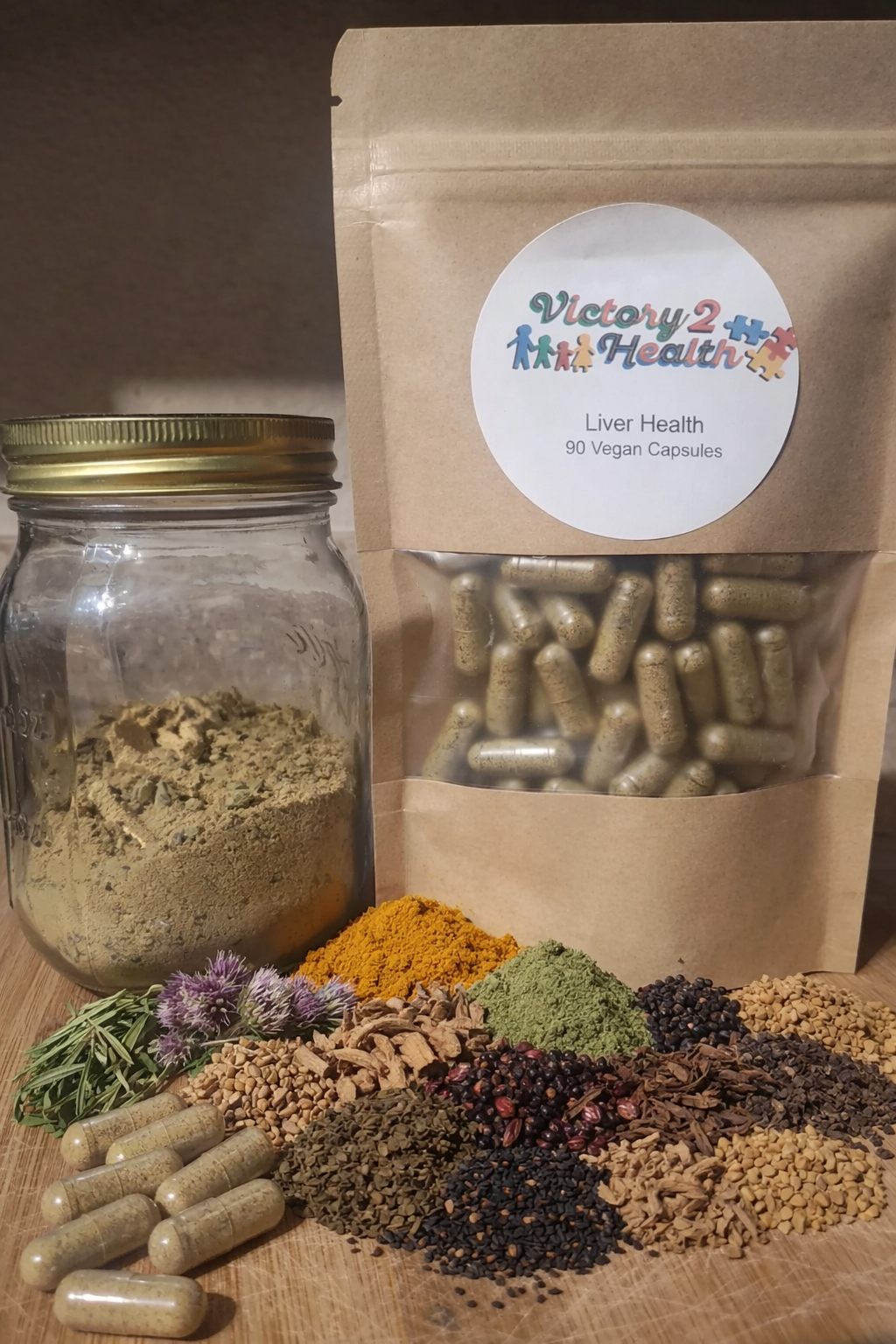
Ingredients - Milk thistle, dandelion root, turmeric, goldenseal root, matcha, schisandra berry, sarsaparilla, licorice, black seed, burdock root and fenugreek seed.
Milk Thistle (Silybum marianum)
The main compound silymarin helps with non fatty alcoholic liver disease NFALD. The antioxidants decrease reactive oxygen species (ROS) which are natural metabolic processes this is great for cirrhosis. Stabilizes liver cell membranes, reduces inflammation by inhibiting NF-κB, stimulates hepatocyte regeneration (protein synthesis) and inhibits fibrosis.
The science says It helps with grammar-glutamyl transferase (GGT) levels which are critical in general especially people will never issues
Dandelion Root
Increases bile secretion helps remove toxins and supports digestion.
The science says https://pmc.ncbi.nlm.nih.gov/articles/PMC10343869/ Journal of Ethnopharmacology, 2010
Turmeric (Curcumin)
Prevents inflammation, fibrosis and oxidative damage in liver tissues.
The science says https://pmc.ncbi.nlm.nih.gov/articles/PMC6855174/
Goldenseal Root (Hydrastis canadensis)
Berberine improves liver enzyme activity and may reduce fatty liver disease markers.
The science say Journal of Clinical Pharmacy and Therapeutics, 2010 and https://pmc.ncbi.nlm.nih.gov/articles/PMC3703418/
Matcha (Green Tea)
Epigallocatechin gallate (EGCG) supports autophagy and mitochondrial protection in liver cells.
The science says
https://pmc.ncbi.nlm.nih.gov/articles/PMC7504867/
https://www.sciencedirect.com/science/article/abs/pii/S1043661815301560
Schisandra Berry
Enhances liver detox enzymes, DNA repair, and protects against toxins.
The science says https://www.scientificarchives.com/article/schisandra-chinensis-in-liver-disease-exploring-the-mechanisms-and-therapeutic-promise-of-an-ancient-chinese-botanical
Licorice Root
A compound called Glycyrrhizin reduces inflammation, supports glutathione, and may protect against hepatitis.
The science says https://pmc.ncbi.nlm.nih.gov/articles/PMC7168410/
https://pmc.ncbi.nlm.nih.gov/articles/PMC4052927/
Black Seed (Nigella sativa)
Thymoquinone improves liver enzyme levels, reduces fibrosis, and enhances antioxidant status.
The science says https://pmc.ncbi.nlm.nih.gov/articles/PMC5745534/
Burdock Root
Increases bile flow, reduces inflammation, and scavenges liver-damaging free radicals.
The science says https://pmc.ncbi.nlm.nih.gov/articles/PMC3073957/
Fenugreek Seed
Regulates lipid and glucose metabolism, protects against fatty liver changes and insulin resistance.
The science says https://pmc.ncbi.nlm.nih.gov/articles/PMC11016425/
People who are on blood thinners, on diabetes/hypertension medications, pregnant, breasting, liver medications, statins, antidepressants or chronic kidney disease.
To get maximum benefits from supplements eating/ drinking better is mandatory. Example: 1.5 pound high calorie/ low nutrient meal is always heavier than grams of low calorie/ high nutrient supplements.
Should not be taken with drugs that suppress immune system, has transplant or steroid drugs. “These statements have not been evaluated by the Food and Drug Administration. This product is not intended to diagnose, treat, cure or prevent any disease.
Improve your liver health with these plants.
Education is everything especially when it comes to your body. If you are not educated on your health someone will profit off of it. So even if you don’t don’t get the supplements read the information below to learn something. You are what you consume what’s inside of what you consumed is more important.
The liver has 500 plus different functions, on the right ride of the abdomen and is about the size of a football. Your livery is the master internal detox motherboard working 24 hours a day and filtering blood/toxins / byproducts/alcohol/drugs/ chemicals, metabolizing fats, storing fat soluble in vitamin A/D/E/K, stores vitamin B12, helping energy production, converting thyroid hormones from t4 to t3, activating vitamin D, making bile etc. This organ is a part of the digestive system, endocrine system and circulatory system.
It's powerful as delivery as it has a double edge side. You can be having major liver issues but don't know it usually until it's too late. It can regenerate itself almost completely. It also holds 80 plus grams of glycogen aka glucose. If you are going on a fast the body will help release this glycogen to help with energy levels. Makes proteins like albumin (maintains fluid balance in blood), blotting factors (helps blood clot) and transport proteins. Produces bile which helps broke down fats and remove excess cholesterol/toxins/bilirubin. Well at the same time it helps regulate/ breakdown cortisol, estrogen, insulin, testosterone etc
Contrary to popular belief cholesterol is not bad in the liver actually makes over 80% of it. Which helps build healthy cells, digest food, produce hormones, 20% of the brain weight, insulates myelin sheath (wraps around the axons of neurons.
Ingredients - Milk thistle, dandelion root, turmeric, goldenseal root, matcha, schisandra berry, sarsaparilla, licorice, black seed, burdock root and fenugreek seed.
Milk Thistle (Silybum marianum)
The main compound silymarin helps with non fatty alcoholic liver disease NFALD. The antioxidants decrease reactive oxygen species (ROS) which are natural metabolic processes this is great for cirrhosis. Stabilizes liver cell membranes, reduces inflammation by inhibiting NF-κB, stimulates hepatocyte regeneration (protein synthesis) and inhibits fibrosis.
The science says It helps with grammar-glutamyl transferase (GGT) levels which are critical in general especially people will never issues
Dandelion Root
Increases bile secretion helps remove toxins and supports digestion.
The science says https://pmc.ncbi.nlm.nih.gov/articles/PMC10343869/ Journal of Ethnopharmacology, 2010
Turmeric (Curcumin)
Prevents inflammation, fibrosis and oxidative damage in liver tissues.
The science says https://pmc.ncbi.nlm.nih.gov/articles/PMC6855174/
Goldenseal Root (Hydrastis canadensis)
Berberine improves liver enzyme activity and may reduce fatty liver disease markers.
The science say Journal of Clinical Pharmacy and Therapeutics, 2010 and https://pmc.ncbi.nlm.nih.gov/articles/PMC3703418/
Matcha (Green Tea)
Epigallocatechin gallate (EGCG) supports autophagy and mitochondrial protection in liver cells.
The science says
https://pmc.ncbi.nlm.nih.gov/articles/PMC7504867/
https://www.sciencedirect.com/science/article/abs/pii/S1043661815301560
Schisandra Berry
Enhances liver detox enzymes, DNA repair, and protects against toxins.
The science says https://www.scientificarchives.com/article/schisandra-chinensis-in-liver-disease-exploring-the-mechanisms-and-therapeutic-promise-of-an-ancient-chinese-botanical
Licorice Root
A compound called Glycyrrhizin reduces inflammation, supports glutathione, and may protect against hepatitis.
The science says https://pmc.ncbi.nlm.nih.gov/articles/PMC7168410/
https://pmc.ncbi.nlm.nih.gov/articles/PMC4052927/
Black Seed (Nigella sativa)
Thymoquinone improves liver enzyme levels, reduces fibrosis, and enhances antioxidant status.
The science says https://pmc.ncbi.nlm.nih.gov/articles/PMC5745534/
Burdock Root
Increases bile flow, reduces inflammation, and scavenges liver-damaging free radicals.
The science says https://pmc.ncbi.nlm.nih.gov/articles/PMC3073957/
Fenugreek Seed
Regulates lipid and glucose metabolism, protects against fatty liver changes and insulin resistance.
The science says https://pmc.ncbi.nlm.nih.gov/articles/PMC11016425/
People who are on blood thinners, on diabetes/hypertension medications, pregnant, breasting, liver medications, statins, antidepressants or chronic kidney disease.
To get maximum benefits from supplements eating/ drinking better is mandatory. Example: 1.5 pound high calorie/ low nutrient meal is always heavier than grams of low calorie/ high nutrient supplements.
Should not be taken with drugs that suppress immune system, has transplant or steroid drugs. “These statements have not been evaluated by the Food and Drug Administration. This product is not intended to diagnose, treat, cure or prevent any disease.